Showcased by
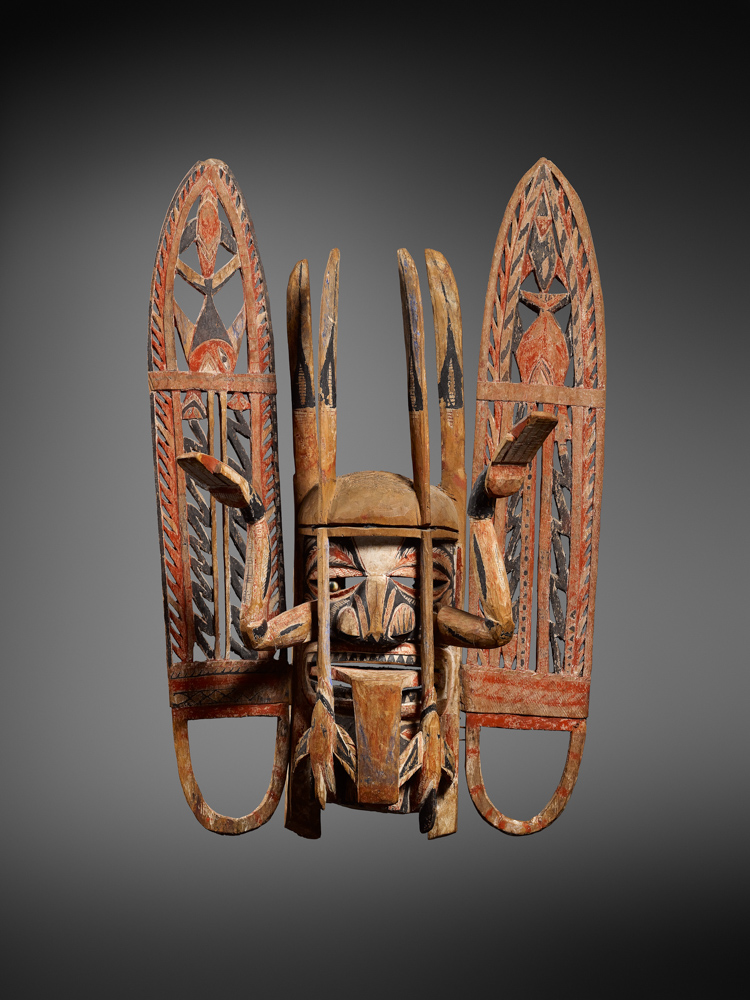
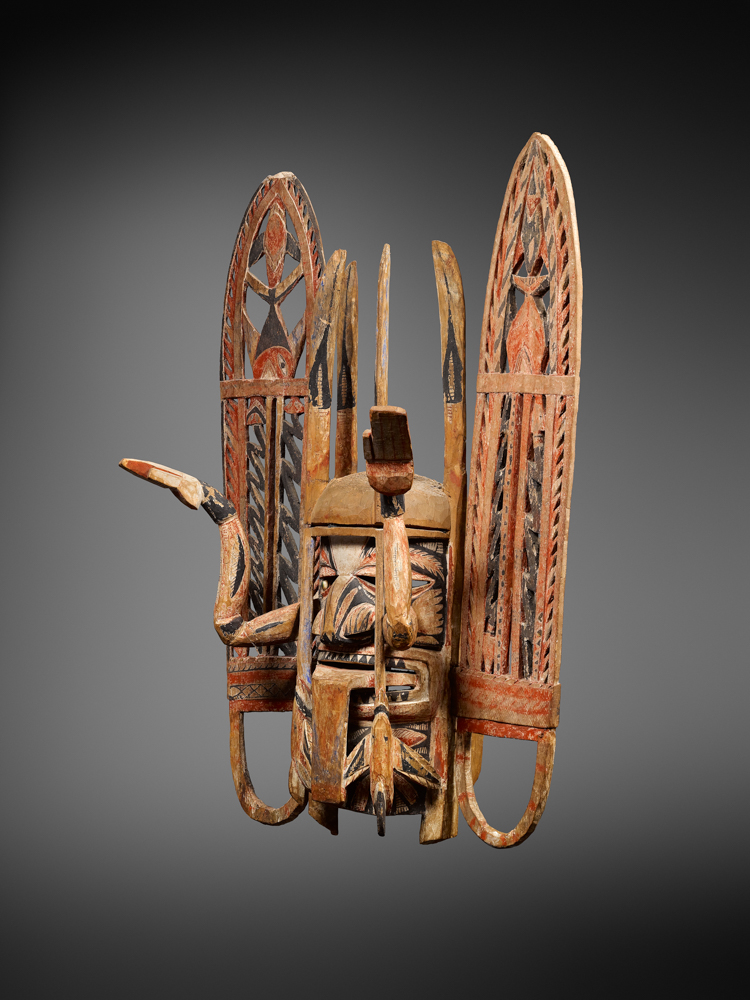
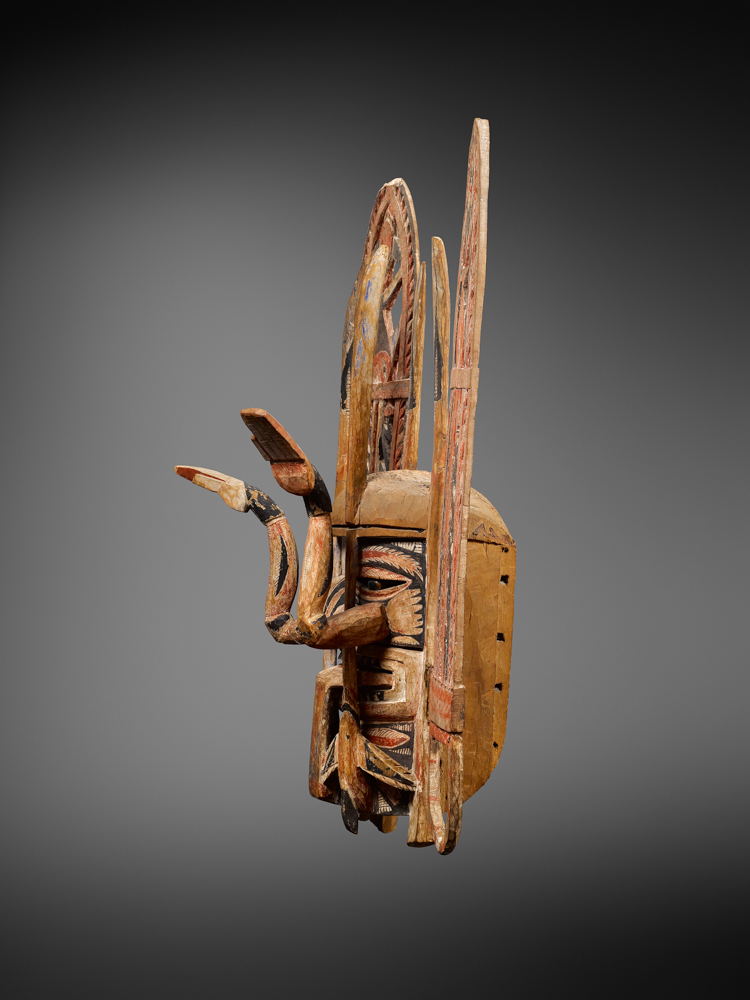
Mask Responsible For Closing The Taboo Ceremonies Matua
Michael Gunn explains in the book, Nouvelle-Irlande Arts du Pacifique Sud, Paris, Musée du quai Branly, 2007, that these « wandering masks were responsible for lifting the taboos at the end of the Malagan commemorative ceremonies. » Quoting Richard Parkinson (1844-1909), he specifies that these masks are too heavy for their wearers to travel through the village; the parents of the deceased therefore wear those masks in front of the house of the masks and stand there without moving. When the kepong and matua masks appear in the community center, lamentations rise up in the audience and the names of the deceased to whom the sculptures pay homage are enumerated amid whining and sobs. The women tear their hair out, sing deep groans and behave as if they are mad with pain. This Matua mask would be the only known example with arms.
Provenance
Purchased in the late 1930s from the heritage of Dr. Mascher, a resident of Dresden-Kleinzschachwitz, a doctor on a German ship at the turn of the century, and then kept in a family in Munster, Germany.
Publication(s)
Exhibition(s)