Showcased by
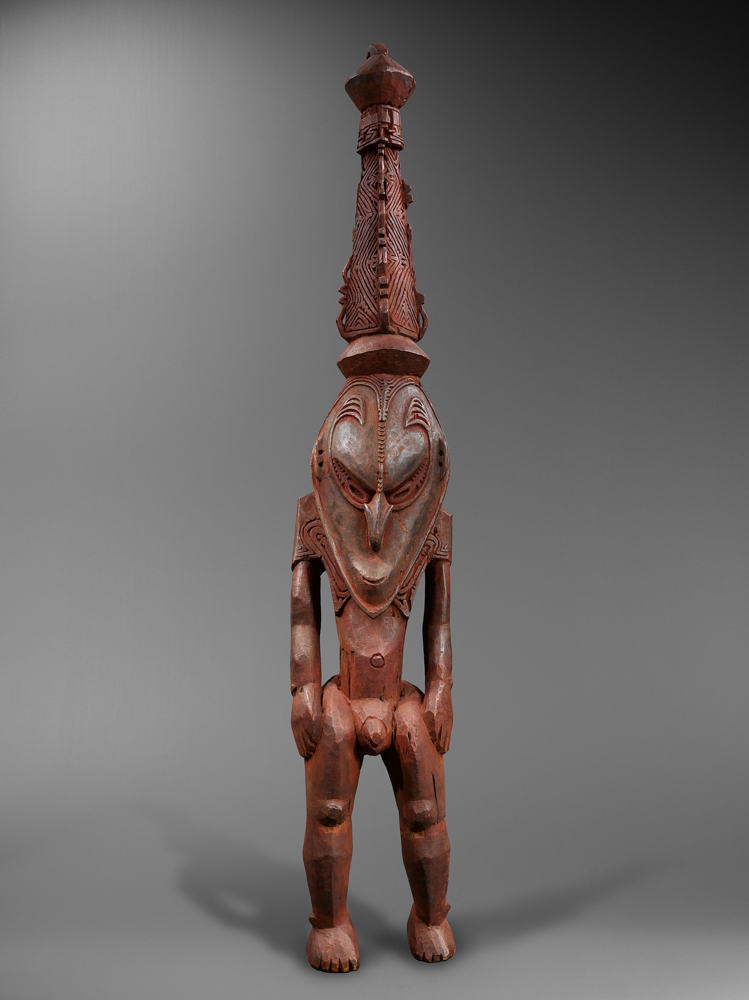
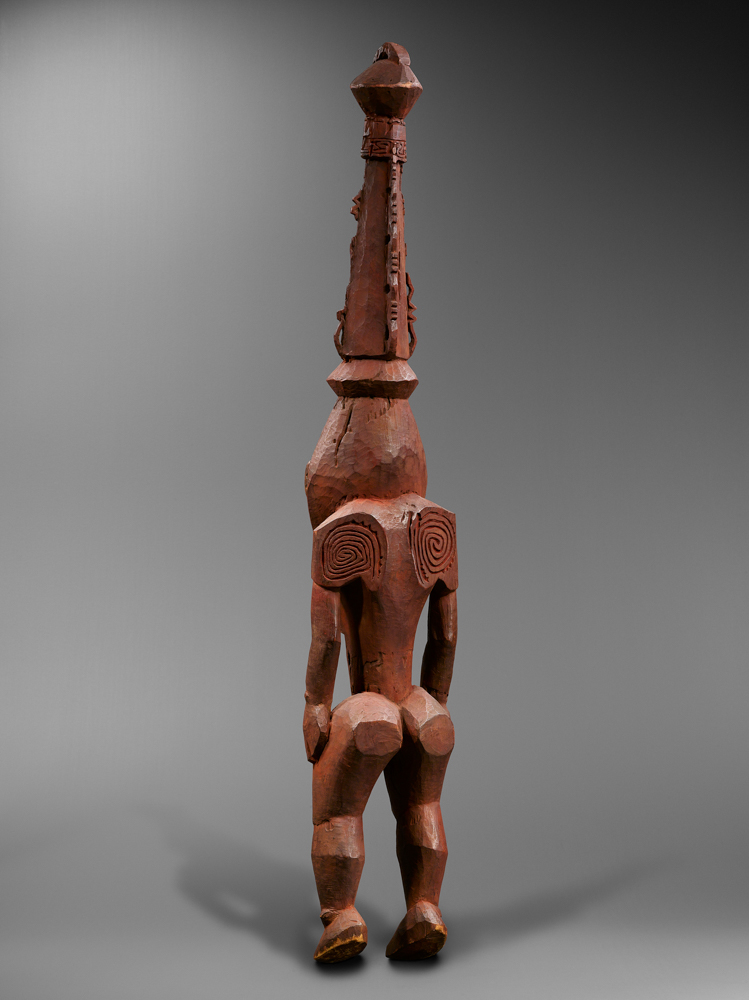
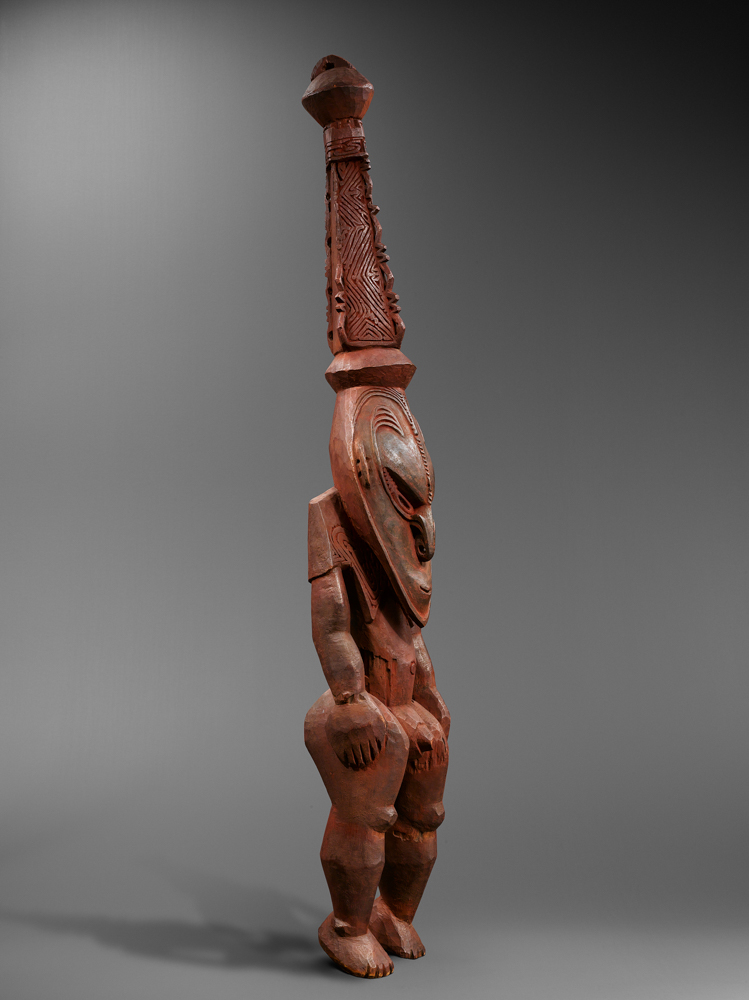
Ancestor Figure Kandimbong
Important ancestral male effigies from the Lower Sepik region are generally referred to as kandimbong. It can be the personification of the founders of clans, deceased people or also mythical heroes. The figure is shown standing, hands resting on the hips. The face, with a pointed chin and descending low on the chest, is particularly strong here. It is topped with a richly ornate conical male headdress which represents a type of hairstyle that was common in the early 20th century, where a man shaved his hair from the forehead and wore a sort of decorated fiber cap through which the hair grew. So that they appear from the top of the headdress. Red ocher is used as body paint for ceremonies. The scarified patterns on the torso and shoulder blades represent the initiation marks. Originally this representation of an ancestor was to wear a tapa loincloth tied around the hips as well as various ornaments, some of which were probably attached to the holes visible at the level of the ears.
Provenance
Collected by Albert Gross between 1934 and 1940
Publication(s)
Exhibition(s)