Showcased by
Figure
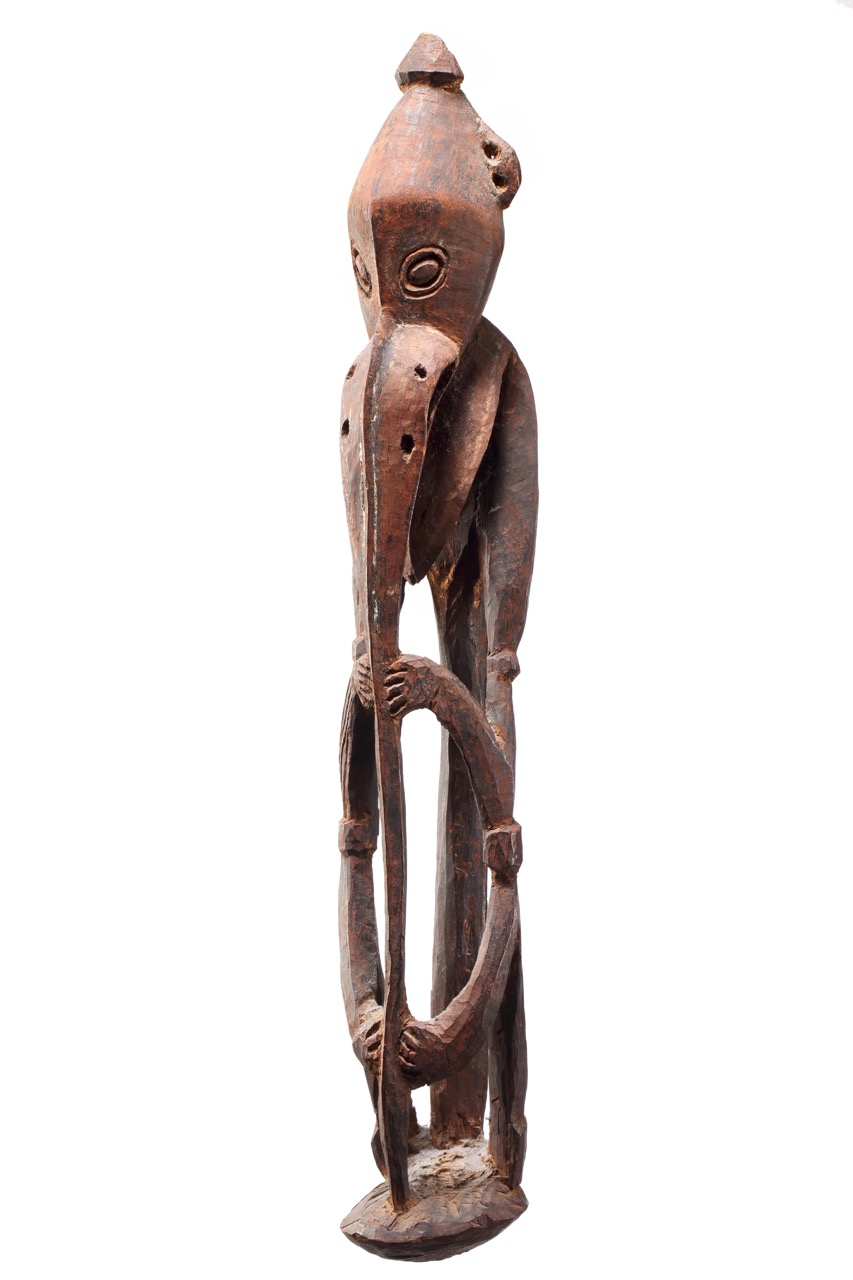
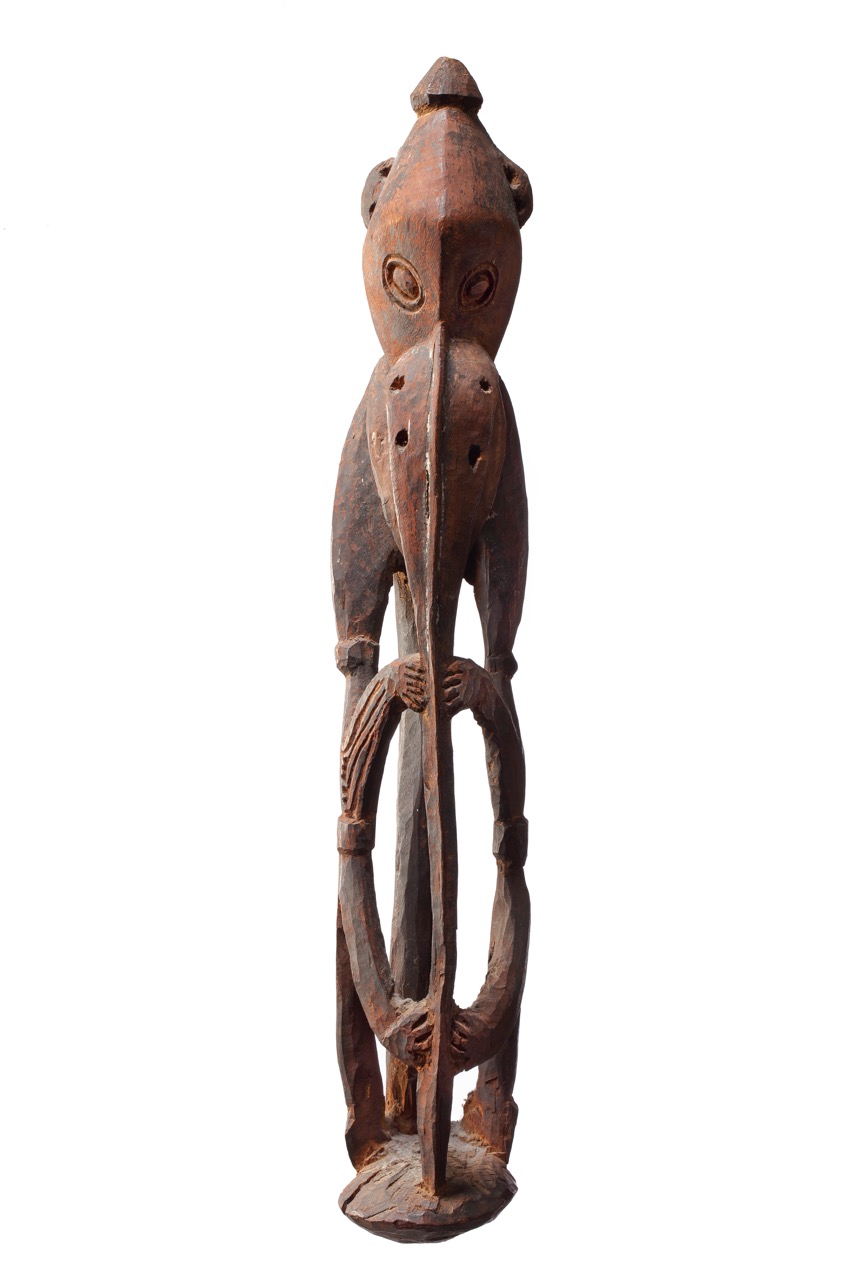
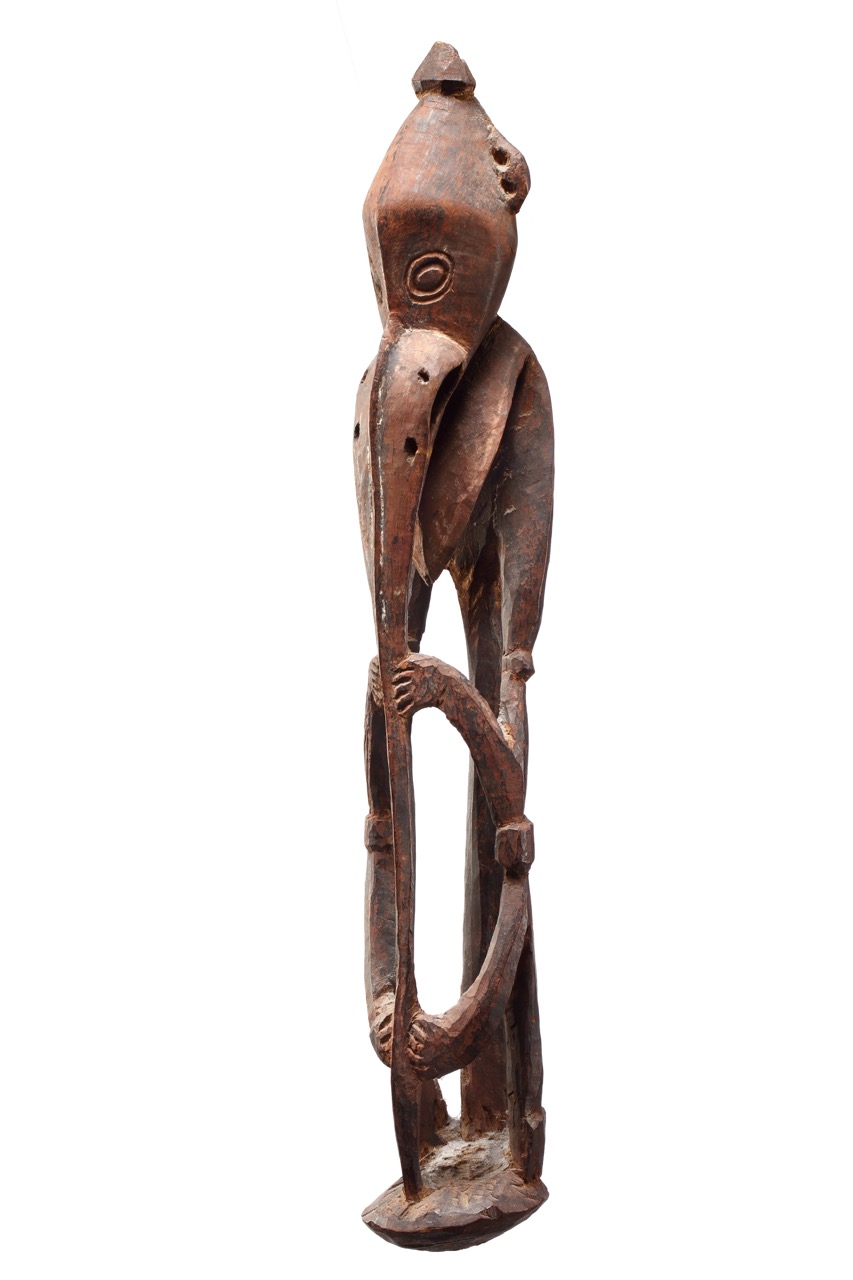
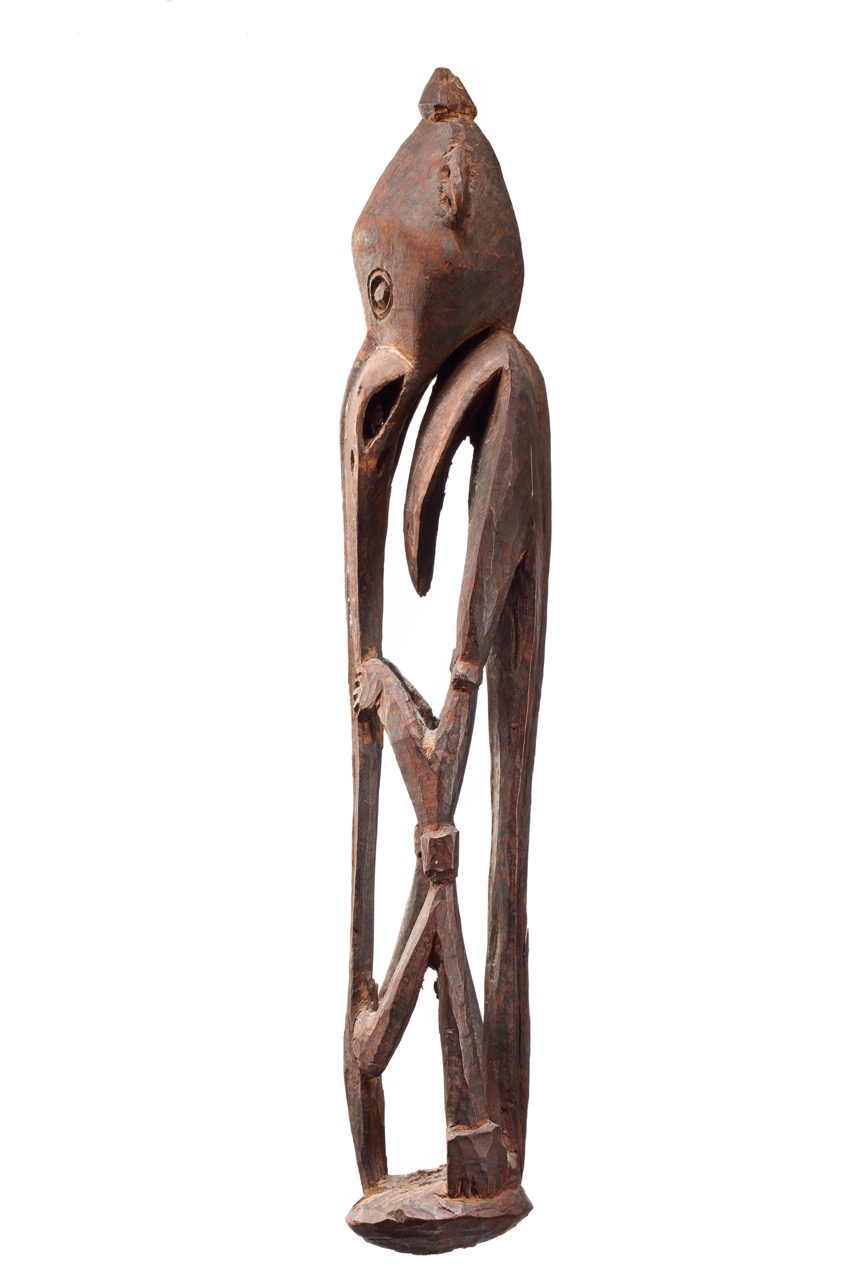
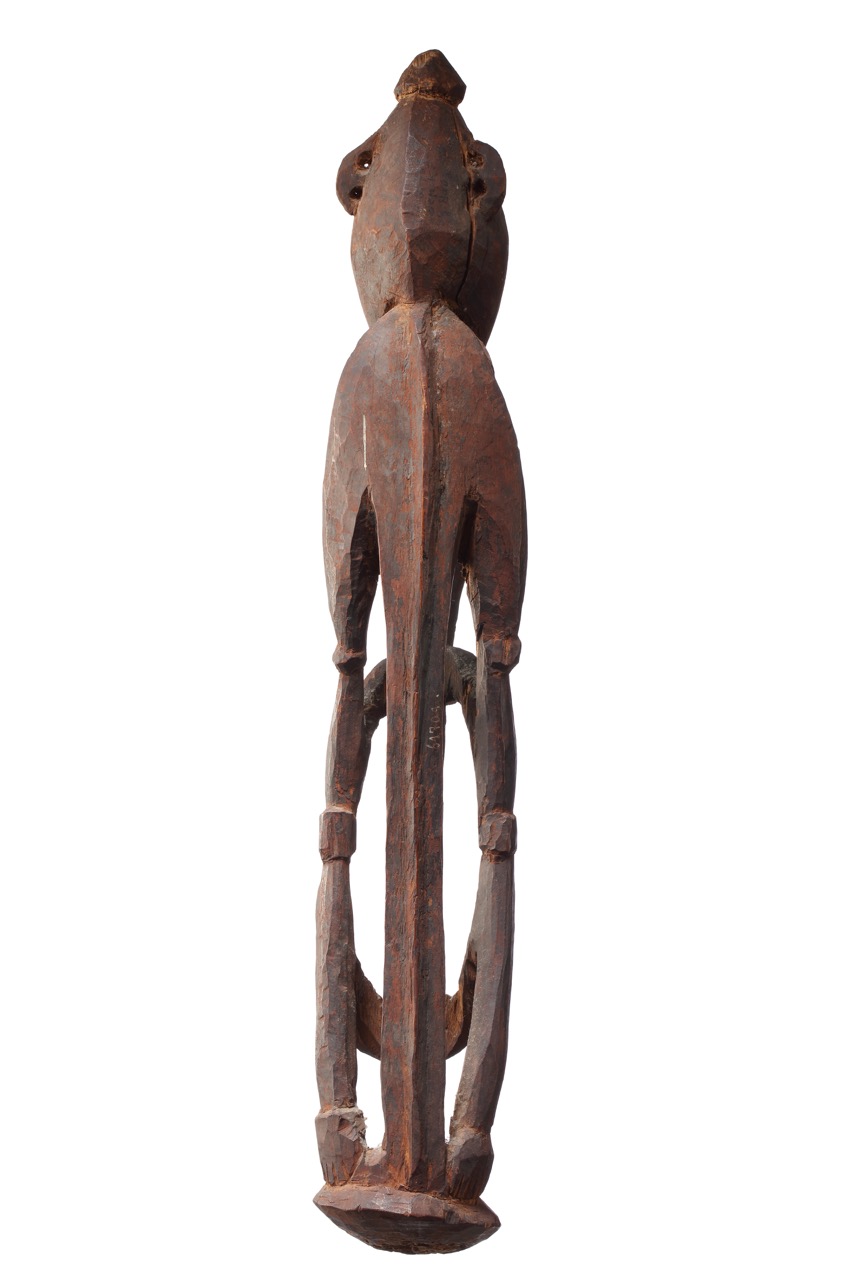
Artists of the Kopar and Angoram people, who live near the mouth of the Sepik River in northern New Guinea, created distinctive openwork figures which probably portray powerful spirits with long beak-like noses and lithe attenuated bodies.
Some sources say that the figures were dance accessories, carried or worn by performers at initiations and other ceremonies.
Tied to short lengths of bamboo, which survive on some examples, they were held in the hand as dance wands or, according to one account, affixed to a framework worn on the dancer’s back.
This figure once belonged to the painter and sculptor Serge Brignoni (1903–2002), who perhaps was drawn to it by its distinctive treatment of the human form.
The originality and plasticity with which artists from New Guinea and other parts of the Pacific portrayed the human image was greatly admired by the avant-garde and surrealists, whose works often incorporate imagery closely inspired by Oceanic art. (source: metmuseum.org)
Provenance
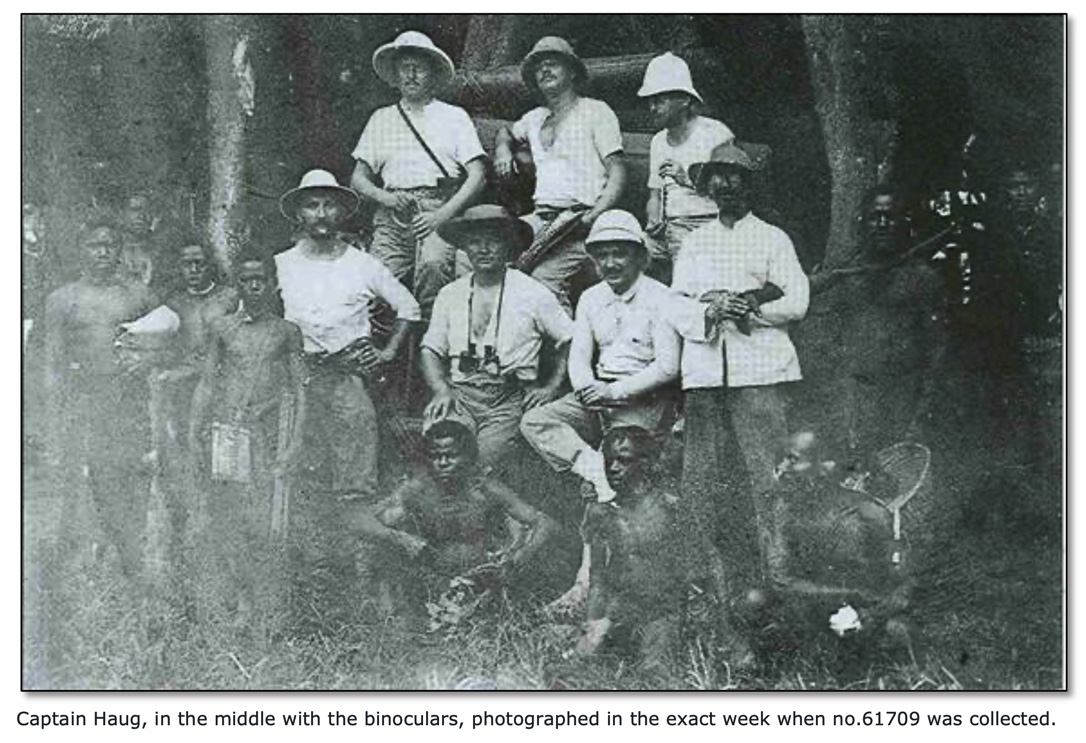
Collected by Captain Haug, the German ‘Kapitan’ of the ship « Siar », from the ‘Neuguinea- Kompagnie’.
Haug navigated up the Sepik River from July 30 till August 6, 1909 going about 346 km upstream.
He was accompanied by six scientists: Mr. Heine, Dr. Schlechter, Dr. Schlaginhaufen, Dr. Scholz, Dr. Hoffmann and Prof. Neuhaus.
Together, within only a week of time, they collected a lot of objects (Reche, 1913:12).
This statue, number 61709 was registered on 12 November 1909 in the Linden museum, Stuttgart, Germany.
On 17 December 1951 it was exchanged with Serge Brignoni.
Publication(s)
Exhibition(s)